
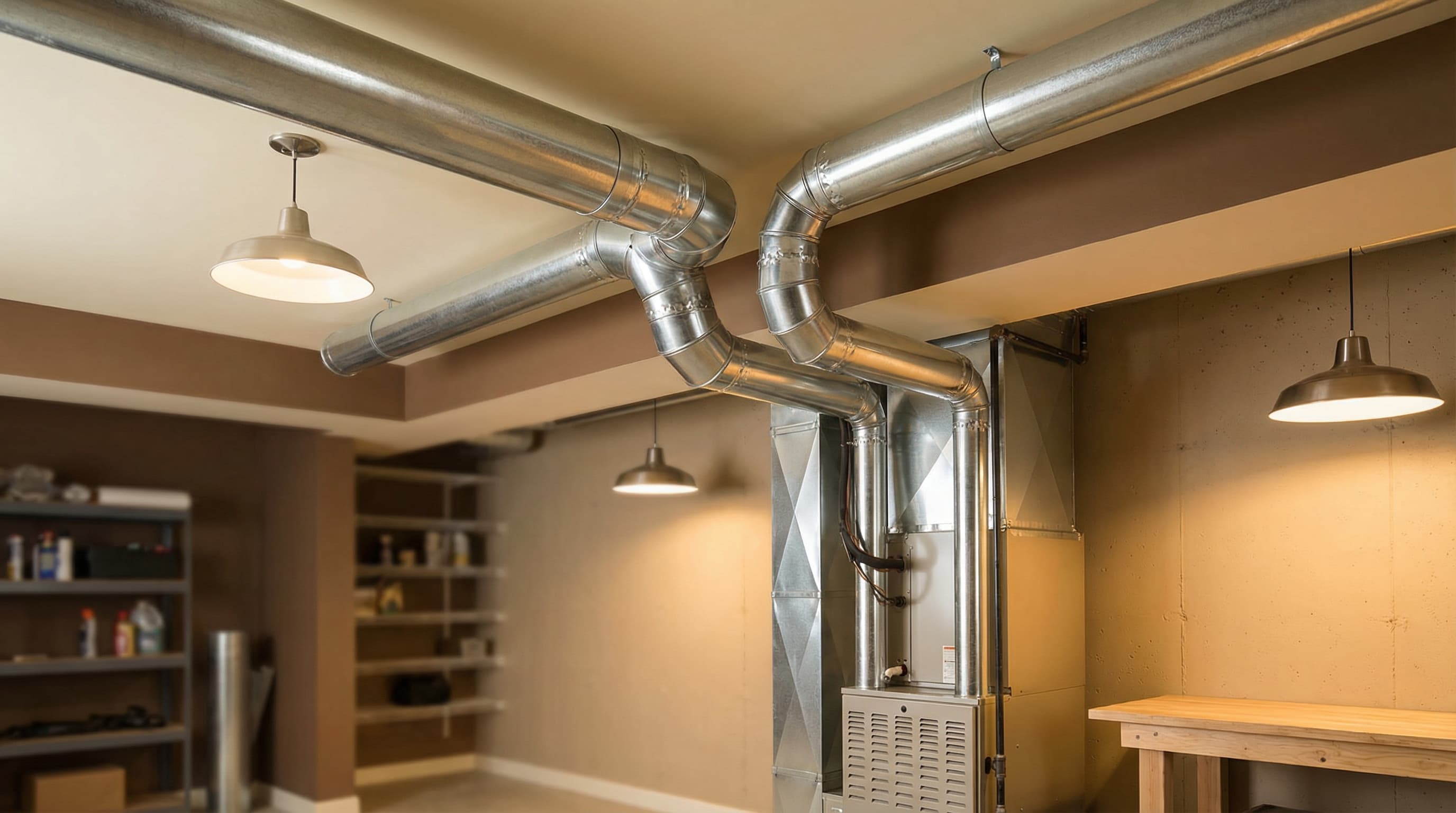
Duct Cleaning
Why Duct Cleaning Matters
If your home has a forced-air heating system — whether oil-fired, propane, or electric — every bit of heated air passes through your air ducts before reaching the rooms you live in. Over years of use, the interior surfaces of those ducts collect dust, pet hair, pollen, mold spores, insulation fibers, and other debris. The system doesn't filter all of it out. What stays in the ducts gets recirculated.
Most homeowners never see inside their ductwork, so the buildup goes unnoticed until symptoms appear: rooms that don't heat evenly, persistent dust on furniture no matter how often you clean, or allergy symptoms that worsen when the heat kicks on. These are signs that the air distribution system — not just the furnace — needs attention.
Professional air duct cleaning removes accumulated contaminants from the entire HVAC system: supply ducts, return ducts, registers, and the main trunk lines. The result is cleaner air in every room, better airflow, and a heating system that doesn't have to work as hard to keep your home comfortable.
What Clean Ducts Do for Your Home
Duct cleaning isn't cosmetic — it has measurable effects on air quality, system performance, and operating cost.
Improved Indoor Air Quality
Your ductwork circulates air through every room in your home dozens of times per day. Over time, dust, allergens, pet dander, mold spores, and other pollutants accumulate inside the ducts. Every time the system runs, those contaminants get pushed into your living space. A thorough duct cleaning removes this buildup at the source — not just at the register, but throughout the entire air distribution system.
Better HVAC Efficiency
Dust and debris inside your ductwork create resistance to airflow. Your blower motor has to work harder to push the same volume of air through partially restricted passages. This means longer run times, more wear on components, and reduced heat output at the registers. Clean ducts allow the system to operate the way it was designed to — moving air freely and transferring heat efficiently.
Lower Energy Bills
When your heating system doesn't have to fight through restricted ductwork, it uses less energy to maintain temperature. The U.S. Department of Energy estimates that 25 to 40 percent of the energy used for heating and cooling is wasted due to contaminants in the HVAC system. Clean ducts won't fix a poorly insulated house, but they eliminate one significant source of unnecessary energy consumption.
Extended Equipment Life
A heating system running against dirty ductwork is a heating system under stress. The blower motor runs longer, the heat exchanger cycles more frequently, and filters clog faster. Over a few heating seasons, this added strain accelerates wear on components that are expensive to replace. Regular duct cleaning is one of the simplest ways to protect your investment in your heating system.
What a Professional Duct Cleaning Involves
A proper air duct and vent cleaning is not someone running a shop vac up to each register for five minutes. It's a systematic process that addresses the full air distribution system — and it takes the time it takes to do it right.
Inspection & Access
We start with a visual inspection of the duct system — checking access points, identifying problem areas, and noting the general condition of the ductwork. Register covers are removed. Access panels are opened where needed. We look at what we're dealing with before we start cleaning.
Agitation & Extraction
Compressed air tools and mechanical brushes dislodge debris from duct surfaces. A high-powered vacuum system connected to the main trunk line creates negative pressure throughout the system, pulling loosened contaminants out rather than pushing them further in. Every supply and return run gets addressed individually.
System Reassembly & Verification
Once cleaning is complete, all registers are reinstalled, access points are sealed, and the system is run to verify proper airflow at each supply point. We leave you with a clean system and an honest assessment of anything else we noticed — duct sealing issues, insulation problems, or areas that need further attention.
Signs Your Ducts Need Cleaning
Most homeowners don't think about their ductwork until something feels off. Here are the common indicators that it's time.
Visible Dust Buildup Around Vents
If you can see dust or debris collecting around your supply or return registers, it's a clear indicator that the ductwork behind them is carrying and depositing particulate throughout your home. Cleaning the vent covers alone doesn't address what's inside the ducts.
Allergy Symptoms Worsening Indoors
If household members experience more sneezing, congestion, or irritation inside than outside — especially when the heating system runs — dirty ductwork may be circulating allergens like dust mites, pet dander, pollen, and mold spores through the living space.
Musty or Stale Odors When the System Runs
A persistent musty smell when the furnace kicks on often means organic material — dust, moisture, or microbial growth — has accumulated in the duct system. Air fresheners mask the symptom. Cleaning the ducts addresses the source.
Uneven Airflow Between Rooms
If some rooms get noticeably less airflow than others, partial blockages in the ductwork may be restricting delivery. Dust buildup, debris, or even collapsed flex duct sections reduce the system's ability to distribute heat evenly.
Recent Renovations or Construction
Construction generates enormous amounts of fine particulate — drywall dust, sawdust, insulation fibers — that gets pulled into the return air system and deposited throughout the ductwork. If you've had work done on your home, the ducts should be cleaned afterward.
It's Been More Than 3–5 Years
Even in a clean home, ductwork accumulates dust, pet hair, and debris over time. The National Air Duct Cleaners Association recommends cleaning every 3 to 5 years as a general guideline — more frequently if you have pets, smokers, or allergy sufferers in the household.
Indoor Air Quality and Your Health
The EPA estimates that indoor air can be two to five times more polluted than outdoor air. In Maine, where homes are sealed tight against the cold for six or more months of the year, this matters. Your heating system is the primary mechanism circulating air through your home — and if the ductwork is dirty, every cycle pushes contaminants into your living space.
For households with young children, elderly residents, or anyone with asthma, allergies, or respiratory conditions, the quality of the air being circulated is not a minor concern. Dust mites, mold spores, pet dander, and bacteria can all accumulate in ductwork and be distributed continuously while the system operates.
A Note on Mold
If you can see or smell mold near your HVAC system or registers, the ducts need to be inspected and cleaned promptly. Mold in ductwork is a serious indoor air quality issue — the system actively distributes spores to every room it serves. If we find mold during a duct cleaning, we'll tell you what we see and recommend the appropriate next steps. We don't sugarcoat it.
Ready to Schedule?
Call us directly or send a message and we'll get back to you.