
Oil Tank Services
The Problem With Old Single-Wall Tanks
Most single-wall steel tanks installed before the 1980s are at or well past their designed service life. The failure mode is predictable and insidious: steel tanks corrode from the inside out.
Water condensation is the primary culprit. When warm fuel oil contacts the cold interior wall of a steel tank, moisture from the air above the fuel condenses and sinks to the bottom — fuel oil and water don't mix. Over years, this pooled water, combined with the acidic byproducts of fuel oil degradation, attacks the steel interior wall. The process is slow, silent, and invisible from the outside. The exterior may look serviceable — perhaps just some surface rust — while pinhole perforations are forming in the floor of the tank.
By the time you see oil on your basement floor, you almost certainly have also contaminated the soil beneath your slab. In Maine, an oil tank leak is an environmental incident. The Maine Department of Environmental Protection tracks oil spills. Remediation — removing contaminated soil, treating groundwater, documenting cleanup — can run tens of thousands of dollars. Homeowners insurance coverage for oil tank leaks varies enormously by policy; many standard policies provide limited coverage or none at all without a specific oil tank endorsement.
The math is straightforward: the cost of replacing an aging tank with a modern double-wall unit is a fraction of the cost of a contamination cleanup. The sensible decision is to replace a suspect tank before it fails — not to wait for the problem to announce itself.
Signs Your Tank May Be at Risk
Most tank failures can be anticipated. Here are the signs that warrant a professional oil tank inspection and serious consideration of replacement.
Visible Surface Rust
Surface corrosion on the exterior of a steel tank is a leading indicator of active corrosion inside. The interior degrades faster than the exterior. If you can see rust on the outside, the inside may be significantly worse.
Tank Age Over 20 Years
Single-wall steel tanks have a generally accepted service life of 20–30 years under good conditions. Many tanks installed in the 1980s or earlier are well past this range. If you don't know when your tank was installed, assume it's old.
Prior Leak or Spill History
A tank that has leaked once has already shown structural vulnerability. Even after repair, a tank with a prior leak history should be replaced — not patched and forgotten.
Soft Spots or Deformation
Any visible dimpling, bulging, or soft areas in the tank shell are signs of internal corrosion thinning the steel wall. This is a failing tank. Stop using it and call us.
Persistent Oil Smell
A chronic fuel oil odor in the basement without a visible spill often indicates a pinhole leak — too small to see, but large enough to smell and to contaminate the soil below your floor slab. This needs investigation immediately.
Old-Style Strap Cradles or Original Fittings
Tanks installed before the 1970s often used strap-style cradles rather than leg mounts, and may still have their original fittings. These are reliably at end of life. Replace before failure.
Double-Wall Tanks
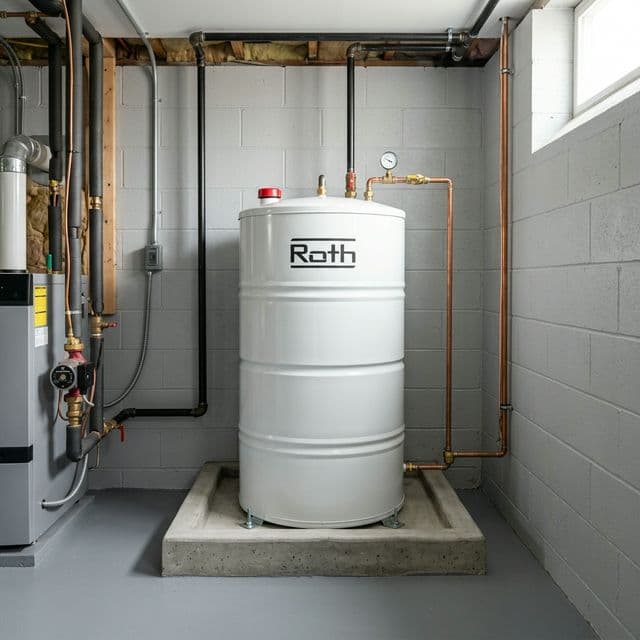
When a tank needs replacing, double-wall construction is the right choice. The engineering difference over a traditional single-wall steel tank is not incremental — it is categorical. Here is why.
The Bottom Line on Double-Wall Tanks
If you are replacing a tank, the incremental cost of going double-wall versus single-wall is modest — and pays for itself quickly through peace of mind, insurance savings, and the elimination of contamination risk. The inner lining of a double-wall tank does not rust. It cannot rust. The failure mode that destroys steel tanks simply does not exist with this construction.
Many homeowners insurance carriers offer reduced premiums or specific endorsements for double-wall tank installations. Ask your agent. The savings may reduce the payback period to just a few years.
Our Service Scope
New Tank Installation
We handle complete new oil tank installations — both replacements for aging basement oil tanks and above-ground tanks, and new installations in construction or previously non-oil-heated homes.
- Tank placement and positioning
- Supply line and approved fittings
- Vent whistle and fill pipe installation
- Overfill protection device
- Connection to existing burner supply line
- System operational test after installation
Pump-Out & Removal
Before any old tank can be removed or decommissioned, all remaining fuel must be pumped out and the tank interior cleaned to remove sludge and residual oil.
- Coordinate fuel pump-out of remaining oil
- Disconnect all supply, fill, and vent lines
- Full tank removal and proper disposal
- Site cleanup and inspection
- Documentation for insurance or property records
Ready to Schedule?
Call us directly or send a message and we'll get back to you.