
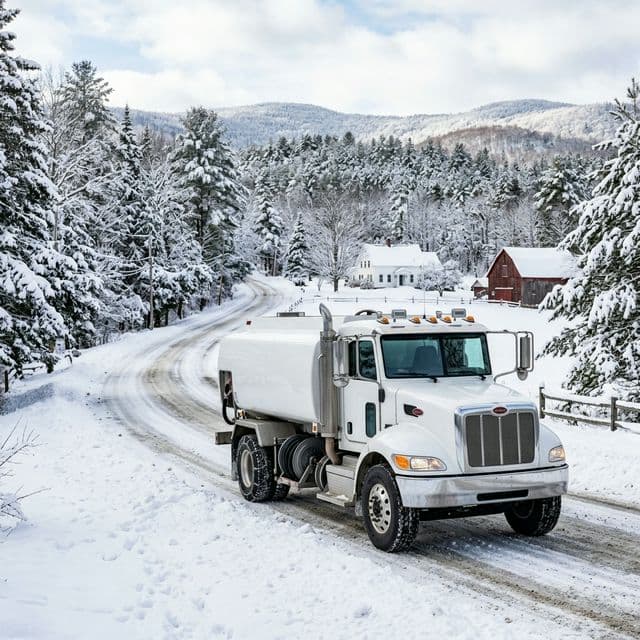
Oil Delivery
What We Deliver
#2 Heating Oil
No. 2 home heating oil — also called fuel oil or simply "number two" — is the standard residential heating fuel for oil burners across Maine. For most homes with a standard oil burner and an indoor or basement tank, #2 oil is the correct fuel.
Used in: Standard residential oil burners, oil boilers, oil furnaces, most commercial heating equipment.
Kerosene (#1 Fuel Oil)
Kerosene is a more refined, cleaner-burning fuel than #2 oil, with a much lower cold-weather gel point. It is also more expensive per gallon.
Kerosene is the required fuel for Toyotomi and Monitor direct vent heaters. It is also the right choice for outdoor tanks, outbuildings, and any tank in an unheated space where fuel gelling during extreme cold is a concern.
Required for: Toyotomi and Monitor heaters, outdoor tanks.
Will-Call & Scheduled Delivery
We offer two ways to get fuel — whichever fits how you like to manage your home.
Will-Call
You call when you need fuel and we schedule the delivery. You stay in control of your timing — no automatic programs, no surprises. Best for customers who prefer to manage their own schedule and keep an eye on their gauge.
Automatic Delivery
We set up automatic delivery on a recurring schedule based on your typical usage so you don't have to track it yourself. Great for customers who want one less thing to think about during a busy Maine heating season.
Whether you prefer will-call or automatic heating fuel delivery, managing your fuel well starts with knowing a few things about your system:
Gallon Tank
The most common residential tank size in Maine homes. A quarter tank is about 69 gallons. At typical winter burn rates of 5–8 gallons/day in cold weather, that's 8–14 days of fuel at the bottom of the gauge. Don't cut it close.
Gallon Tank
Also common, especially in larger homes. Quarter tank is approximately 82 gallons. Same principle applies — check the float gauge on the tank neck and call before you reach it.
Gallons Per Day
Typical consumption range for a 1,500–2,000 sq ft home during a cold Maine winter day (0–20°F range). A week of hard cold can consume 35–56 gallons. Plan accordingly.
Tips for Managing Your Fuel Supply
- Check your tank gauge weekly during December through March — more often during extended cold snaps
- Call when your gauge reads between 1/4 and 3/8 — don't wait until you're critically low
- Note that the float gauge on most tanks is not precision instrumentation — treat it as approximate, not exact
- If you're going to be away from the house for more than a few days during cold weather, arrange delivery before you leave
The Quarter-Tank Rule: Never Let It Drop Below 1/4
Every oil tank accumulates sediment and water at the bottom over time. This is a normal byproduct of years of condensation (warm fuel hitting a cold tank wall creates water vapor that condenses and sinks) and the natural breakdown of fuel oil into heavy sludge over months and years.
Oil tank pickup tubes are positioned near the bottom of the tank — high enough to stay above the sediment layer under normal conditions. When your tank drops below a quarter full, that margin disappears and the pickup is much closer to the sludge, water, and particulate debris that settle at the bottom over time.
When debris enters the fuel line, it heads straight for your filter and nozzle. A clogged filter causes fuel starvation and a no-heat lockout. If debris gets past the filter, it can clog the nozzle and damage the fuel pump. If the level drops below the pickup tube entirely, air enters the fuel line — and a system that has air-locked will not restart without a technician bleeding the line.
The fix for all of this is simple: order fuel before you hit a quarter tank. Keep a schedule. Check your gauge regularly during cold stretches when you're burning fast.
Ran Out of Oil? Call Us.
It happens. A stretch of brutal cold, an off-by-a-few-days estimate, a gauge that read higher than it was — and suddenly you're looking at a cold house and a dry tank. We understand, and we don't make it harder than it needs to be. Call us and we will prioritize getting fuel to you.
There is one important thing to know before you call: if your system ran completely dry and has been off for any period of time, simply refilling the tank may not restart your system.
When a tank runs dry, air enters the fuel supply line — from the tank all the way to the fuel pump. The pump cannot self-prime against a full air lock. The system needs to be bled: a technician manually purges the air from the fuel line and pump until fuel flows freely, then verifies the system starts and runs correctly. This is a quick job for someone with the right tools, but it is not something you can do by just pushing the reset button.
When you call for an emergency delivery, let us know if the system has been off — we can send a technician along with the delivery, or schedule a same-day restart visit.
Ready to Schedule?
Call us directly or send a message and we'll get back to you.